An organised fault description helps when asking about a replacement or requesting a repair assessment. You do not need to become a technician or perform electrical tests: you need to record what is known and separate facts from assumptions. This guide offers a structure for preparing that information and explaining what you need resolved.
Identify the equipment and context
Record the brand, complete model and affected unit. State when the problem began and whether it is intermittent or continuous. If previous work was carried out, describe what the available documentation records without automatically attributing the fault to that intervention.
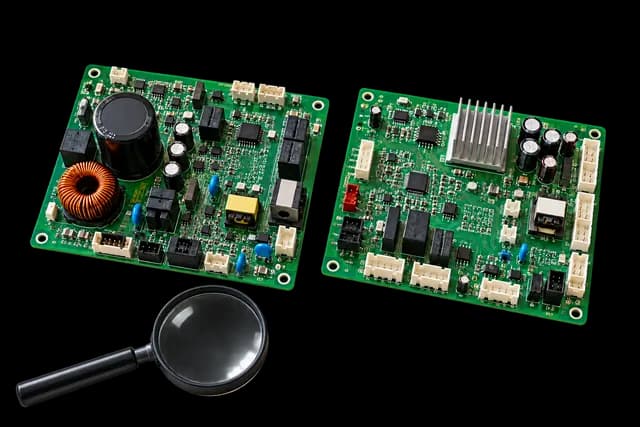
Attach a readable photograph of the equipment label and, if the professional has them, images of the board references. Keep dates with the relevant information so the sequence remains understandable.
Describe what can be observed
Writing 'the unit displays this code and does not start' is more useful than 'the electronics are broken'. Record the exact message, when it appears and which function is unavailable. A short video of external behaviour or a screen photograph can provide context without opening the equipment.
- Symptom and exact code, if present.
- When and how frequently it appears.
- Available information about previous work.
Keep the professional assessment separate
Add the technician's diagnosis or documented checks in a separate part of the message. If the board is still only a possible cause, state that clearly. Do not turn a suspicion into confirmation when requesting the replacement: the person receiving the enquiry needs to understand that limit to provide an appropriate answer.
Finish with a specific request
Explain whether you need to identify a replacement, check an equivalent reference or ask about a possible repair. Include the part reference and product link when available. Keep a copy of the information and update it if the diagnosis changes. This continuity helps prevent photographs, quotations and messages from describing different versions of the same incident.
Is your board faulty, or are you unable to find a replacement? Share its reference and the symptoms so we can assess a possible repair.
Ask about repairing this boardThis guide supports identification and purchasing decisions. Board diagnosis, removal and installation should be carried out by qualified professionals following the equipment documentation.