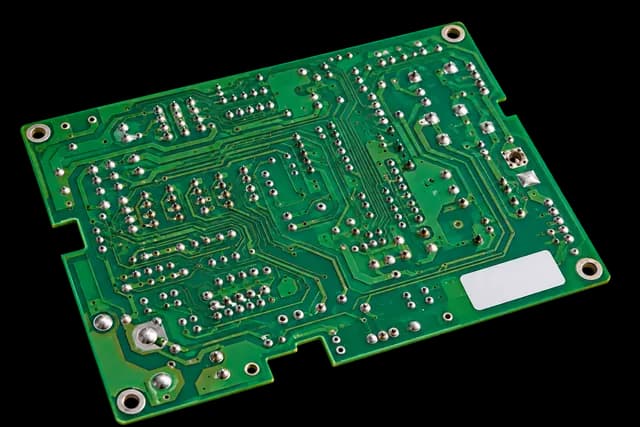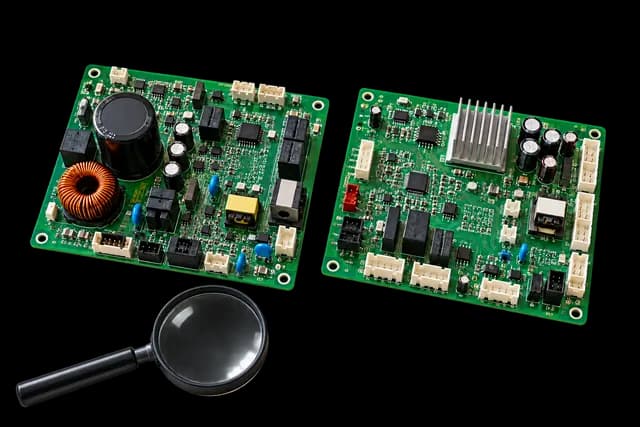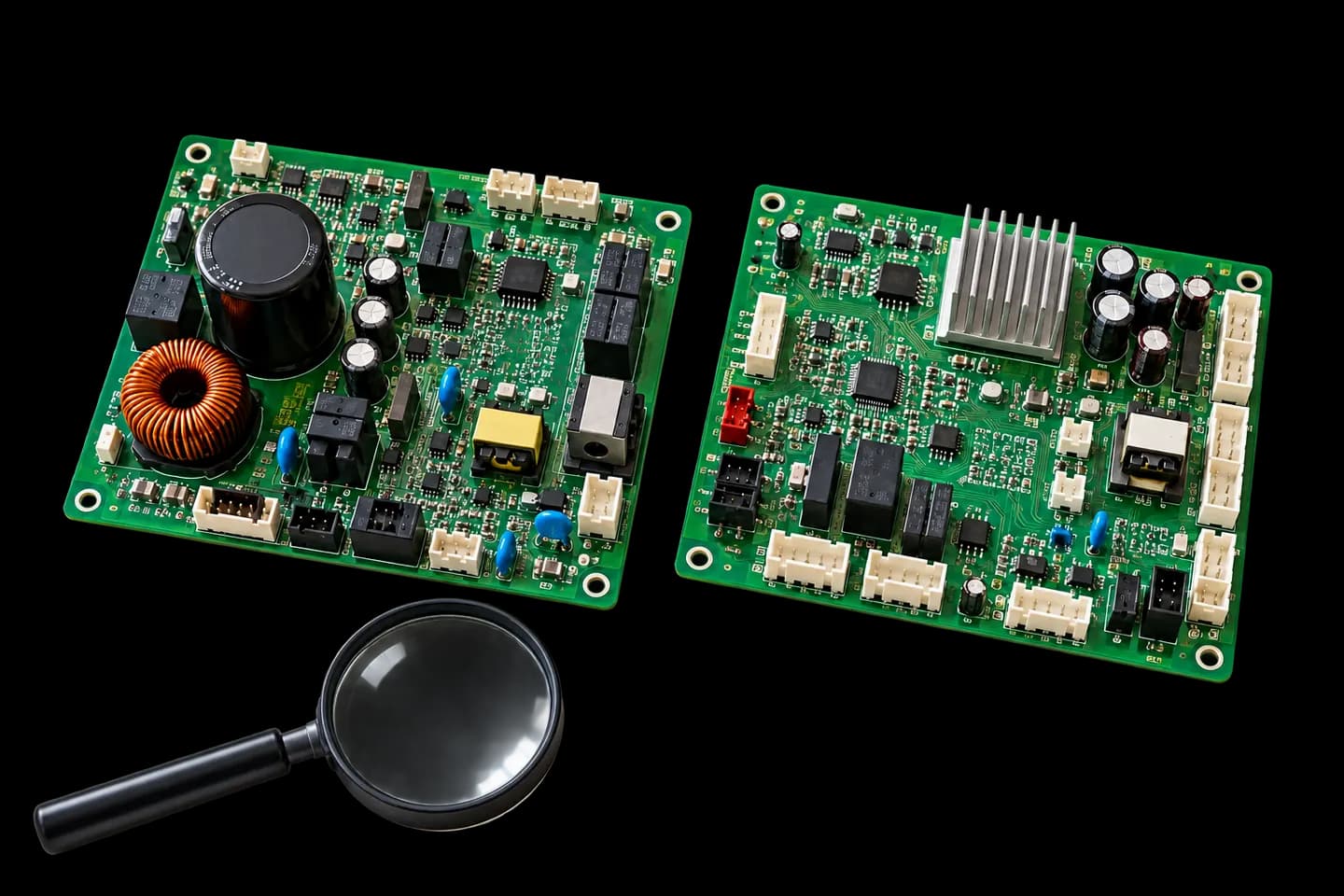
Two photographs may show almost identical boards without providing enough information to interchange them. Shape helps reveal obvious differences, but a purchase needs more precise identification. The aim is not to interpret every component: it is to gather the details needed to confirm the correct part.
Appearance is only a clue
The general circuit layout, mounting points and connectors provide an initial visual comparison. They do not establish that a board is intended for the same equipment. A partial photograph also cannot show details outside the frame.
When comparing images, look for a complete view and readable labels. If the product photo does not reveal the reference, request that information before deciding. Do not fill gaps in the listing with assumptions based on another seller's photographs.
Keep suffixes and revision details
Copy the complete reference from the original board, including hyphens, final letters and revision codes. If the offered part has a different ending, ask about documented equivalence for the specific model. A partial name match does not establish that the difference is unimportant.
- Complete references from both boards.
- Exact equipment model and affected unit.
- Visible differences in labels, connectors and mounting points.
Separate differences from confirmed incompatibility
A difference deserves checking, but it does not automatically prove that the replacement is incompatible. A manufacturer may have documented a superseding part. That relationship needs verification for your equipment; it should not be inferred from a similar advertisement or a photograph shared by another buyer.
Prepare a useful comparison
Send photographs of the original and the replacement product link in the same message. Point out exactly where you see a difference and include the equipment details. Do not cut, adapt or force connections to make a board chosen by appearance fit. Installation belongs with a professional once the part has been identified and confirmed.
Is your board faulty, or are you unable to find a replacement? Share its reference and the symptoms so we can assess a possible repair.
Ask about repairing this boardThis guide supports identification and purchasing decisions. Board diagnosis, removal and installation should be carried out by qualified professionals following the equipment documentation.